The UK economy grew by 0.4% in Q2 2026, with almost half of that expansion coming from information and communications. The AI boom is moving from technological enthusiasm towards economic impact, and execution now decides who benefits.
Research from Emergn suggests large UK businesses lose an estimated £67 billion a year on transformation and AI initiatives that fail to deliver. Businesses are investing in AI faster than they are building the management discipline to make it pay.
ONS data shows 35% of UK businesses now use at least one AI tool, yet almost three-fifths only tinker at the edges of existing operations. Breadth of adoption does not equal depth, and the gap is costing growth.
Microsoft research shows up to 71% of UK employees admit using unapproved AI tools at work. Shadow AI is no longer an IT issue, it is a business risk affecting security, compliance, reputation and operational resilience.
Nearly 60% of enterprise UK AI projects fail to deliver measurable business value within 18 months. The pilot worked, so why did the business not? The real problem is not the technology, it is operational readiness: strategy, data, workflow fit, governance and ownership.
Nearly 70% of organisations remain stuck in reactive or partially proactive maturity stages. The four essential dimensions of data maturity scoring, how to measure them, and the common mistakes businesses make.
Choosing the right data maturity assessment company determines whether your organisation gains actionable insight or receives a generic report with limited value. A structured, step-by-step approach focused on long-term business impact.
Companies invest in new systems, cloud platforms, analytics tools and automation, yet results fall short because the underlying data is not ready. A structured data maturity model gives leadership teams a clear view of capability, risk and opportunity.
Nearly 70% of firms remain in mid level maturity, operating within reactive or partially proactive environments. The five data maturity stages, why organisations get stuck, and how progression shapes decision making, efficiency, AI readiness and competitive positioning.
Around 30% of UK firms remain in a reactive data stage and a further 40% sit in a proactive plateau. A data maturity assessment maps where your data stands across people, processes, technology and value creation, then charts a practical path forward.
UK SMBs face relentless cyber threats, with 43% reporting breaches in 2025 and average costs hitting £990 per incident. Why 24/7 database security monitoring is your frontline defence, the top three practices to safeguard data, and how to ensure compliance.
A 2025 CBI survey shows 80% of UK business leaders cite ethics as the top barrier to AI adoption. Why ethical AI is an accelerator rather than a roadblock, what human oversight delivers, and how to build trustworthy AI frameworks.
Only 16% of UK businesses currently deploy AI while 80% have no concrete plans. A look at adoption rates by sector, the productivity gains reported by adopters, the five barriers holding businesses back and a practical roadmap for 2026.
Why 85% of ransomware attacks strike outside business hours, how skeleton crews and after-hours phishing create openings, and five strategies for fortress-grade midnight database security.
Five critical questions CTOs should ask before the festive lull, the risks hidden in dormant data, and how to adapt your incident response plan for a holiday skeleton crew.
The database investment trends shaping Q1 2026, seven high-impact areas for capital allocation, and the ROI framework CIOs need to present a business case to the board.
Why database routing failures bring operations to a halt, how automated routing and modernisation prevent them, the metrics that prove improvement and the challenges to plan for.
Why legacy broadcast database architecture fails under streaming demands, the consequences of delay, a five-phase modernisation roadmap and the real-world challenges media organisations face.
Why legacy databases struggle with 4K/8K video, real-time viewer data and global OTT delivery, and how Oracle Database 23ai supports modernisation across media operations.
How healthcare, media, renewable energy, security, financial services and retail organisations use Oracle Database 23ai and AI Vector Search to deliver measurable results.
Upgrade eligibility, the mandatory Container Database architecture, AutoUpgrade and Refreshable Clone PDBs, alternative Data Pump and Transportable Tablespaces routes, and the planning checks that decide success.
Ten persistent misconceptions about Oracle Database 23ai, from cost and complexity to AI infrastructure, security, performance and multi-cloud support, set against the facts.
A comparison of Oracle Database 23ai Free and Enterprise editions across resource limits, AI vector search, security, high availability, analytics, deployment and licensing.
Oracle Database 23ai introduces over 300 features that bring artificial intelligence directly to your data, rather than requiring you to move your data to external AI systems.
Over 80% of AI projects fail before reaching production, and 85% of failures cite data quality or availability. These are the five data mistakes SMBs must avoid to protect their AI investment.
58% of telecom buyers across the UK, US and Europe plan to build AI capabilities into their products. This article explores the core AI use cases, benefits and implementation strategies helping telecom SMBs compete with larger operators.
Moving from an AI pilot to enterprise-wide adoption feels daunting, with data silos, limited expertise and budget constraints looming large. This guide walks UK SMB leaders through six steps to scale AI pilot projects effectively in 2025.
With 75% of business leaders viewing AI as critical to their success but only 26% of companies moving beyond proof-of-concept, this guide explores eight proven AI strategies UK businesses are leveraging to gain competitive superiority and transform their market positions.
From cloud pricing optimisation and conversational AI to fraud detection, supply chain optimisation and intelligent document processing, here are ten AI use cases delivering measurable impact, plus how to identify the right ones for your organisation.
29% of UK SMBs say integrating new technology with legacy systems is their top challenge. This guide covers the seven integration barriers, the benefits of getting it right and a six step roadmap for connecting AI to the systems you already run.
With 75% of SMBs experimenting with AI, proving the investment delivers value is the real challenge. This guide covers six metrics to track, from cost savings and revenue growth to time to market and error reduction, plus a worked telecom ROI calculation.
AI pilot projects give SMBs a safe, low-risk way to begin. This seven-step guide covers choosing high-impact use cases, engaging stakeholders, selecting scalable tools, preparing data, launching in parallel, measuring outcomes and planning to scale.
Many C-suite leaders overlook a fundamental prerequisite for AI: a cohesive data strategy. This six-step guide covers assessing your data landscape, setting objectives, governance, preparation, integration and ongoing optimisation.
Before investing in AI, businesses need to know whether their technical, cultural, operational and financial capabilities can support successful adoption. This nine-step guide sets out how to assess AI readiness.
UK SMBs are adopting AI at a rapid pace, but choosing the right AI solution is not as straightforward as picking and plugging in software. This guide breaks down the step-by-step process for identifying the right AI solutions for your SMB.
Implementing a new ERP system can feel daunting, but with Oracle Cloud ERP, you're stepping into a world of streamlined processes, real-time insights, and scalability. This step-by-step guide walks you through a successful Oracle Cloud ERP implementation.
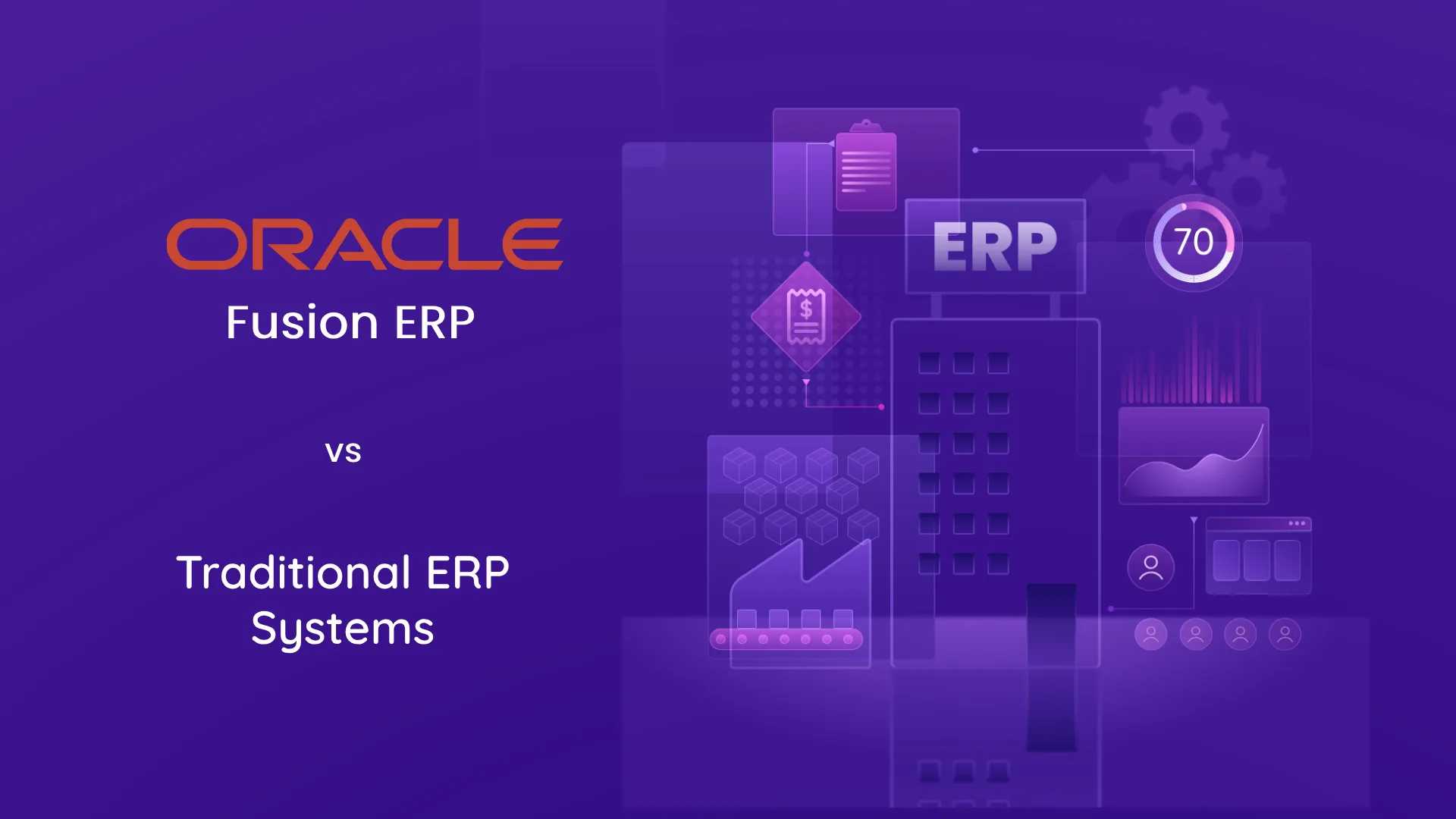
Enterprise Resource Planning (ERP) systems have long been the backbone of business operations, but the limitations of traditional ERP systems are pushing businesses toward modern alternatives like Oracle ERP. This article explores the top seven factors that differentiate Oracle ERP from traditional ERP systems and highlights its benefits.
Oracle Cloud revenue surged by 47% in 2023, with Oracle Cloud emerging as a cornerstone for enterprises modernising their workflows. This article explores why businesses are adopting Oracle Cloud, the key drivers behind migration and the services driving business transformation.
As of 2025, 80% of businesses rely on data analytics to inform strategic decisions, making seamless Power BI integration more important than ever. This article provides a practical, step-by-step guide to integrating Power BI with your existing systems efficiently, from assessing data sources to training your team.
The UK business intelligence market is projected to reach £4.2 billion by 2025, yet many businesses struggle to realise the full return on investment from BI adoption. This article explores the eight most common BI adoption challenges and provides strategic solutions to secure a strong ROI.
Despite global BI spending reaching £25.4 billion, Gartner reports that 70% of business intelligence initiatives fail to meet their objectives. This article delves into 8 often-overlooked reasons why BI strategies fail and offers practical solutions to steer your data initiatives toward success.
92% of UK financial services firms still rely on legacy technology, according to the Financial Conduct Authority. This guide covers the five areas where modern database solutions keep financial institutions secure, compliant and competitive.
Every transaction, customer record and compliance report depends on a secure, high-performing database. This guide covers the eight challenges outdated systems create for financial institutions and why modernisation is now a strategic imperative.
With 44% of organisations having experienced a cloud data breach, traditional security measures are no longer sufficient. Here are the six security technology trends shaping database protection in 2025.
Manual database management is slow, error prone and hard to scale. This guide covers why automation matters in 2025, the technologies to rely on, how to implement it and five trends shaping the future.
Data-driven decision-making is no longer optional for CEOs. This guide explains why 2025 is the turning point, the modern data toolkit, and a framework for turning raw data into actionable insights.
With a 30% rise in cyberattacks over the holidays and downtime costing UK businesses an average of £3,230 per incident, a robust database backup plan is a necessity, not a precaution.
UK businesses faced an alarming 7.78 million cyber attacks in 2024. As the festive season approaches and risk intensifies, discover ten practical cybersecurity strategies to keep your organisation secure.
Database crashes can bring an organisation to a standstill, leading to financial loss, reputational damage and operational disruption. Proactive monitoring helps detect and prevent issues before they escalate.
A database outage is more than a technical glitch. Lost revenue, damaged reputation and recovery expenses make emergency database support a business essential.
Cloud and hybrid IT environments are reshaping how organisations plan for disruption. A modern disaster recovery strategy must span on-premises systems and cloud platforms.
Downtime is more than a temporary inconvenience. From lost revenue and missed opportunities to compliance risk and damaged morale, the real costs can outlast the outage itself.
IaaS, PaaS, SaaS: cloud computing can feel like alphabet soup. At NCS, we cut through the jargon and focus on cloud strategies that deliver real results for your business.
In an era of ever-evolving digital threats, NCS delivers proactive, tailored and round-the-clock cloud security that keeps your digital assets protected.
NCS delivers risk assessment, encryption, intrusion detection, compliance audits and employee training to protect your cloud infrastructure in the digital frontier.
Cloud migration and modernisation help organisations achieve greater efficiency, scalability, and security. NCS London guides you every step of the way.
Frequent downtime, sluggish performance, missing expertise, growing security concerns, and scalability challenges: five signs your business needs 24/7 database support.
AI and cloud computing are no longer emerging trends. They are the driving forces behind modern database management, and 2025 is the tipping point for businesses to embrace them.
Imagine your critical insurance reports stuck in a 14-hour processing jam, derailing your day before it even starts. This was the reality for a global insurance leader using their DQPro application on Azure. With costly server upgrades looming and delays crippling efficiency, NCS stepped in with a smarter plan: precision database tuning. In one move, we cut processing time from 14 hours to 3 and reduced costs by 50%, a true game-changer.
Imagine millions tuning in, breaking news explodes, election results roll live, or the Oscars light up screens worldwide. Now imagine your systems crashing at that exact moment. For one leading media and entertainment company, that wasn't an option. They needed uptime, 24/7, no excuses, and real-time data that never faltered. We stepped in to make it happen.
Imagine your board has already signed off a major transformation, budget committed, architecture agreed, programme in motion, but nobody has tested whether the plan survives contact with your legacy estate and real operating model. That was the position facing a Tier-1 UK roadside assistance provider midway through rebuilding its core operations, prediction, prevention, triage, diagnostics, dispatch and field-service management, around a new cloud-native architecture. NCS ran a 4-week rapid sprint to pressure-test the transition before assumptions hardened into cost, delivering 13 actionable recommendations, 8 of them accepted or already in motion within weeks, and a programme measurably safer to keep funding.
A UK public sector regulatory body was overseeing the carve-out of a regulated infrastructure services organisation responsible for nationally significant data and systems, but the separation plans, costs, dependencies and technology assumptions in front of it were not clear enough to support confident regulatory judgement. NCS was brought in to test three competing separation options against technology, governance, supplier and migration realities, cutting through the noise to find the route that would create genuine operational control rather than a separation in name only. The outcome was a clearer evidence base for regulatory evaluation, reduced delivery risk and a transition model that lowered projected expenditure by more than 20%.
A major UK vocational awarding and certification body was nine months into a core ERP upgrade, enterprise data migration and data centre move, with a fixed four-day bank-holiday cutover window sitting directly ahead of its peak summer certification demand, and no integrated plan, architectural baseline or rehearsal discipline to get it there safely. NCS deployed a senior tiger team to take operational control of the rescue, rebuilding the critical path, the architectural baseline and a minute-by-minute cutover runbook from the ground up. The result was a 100% on-time cutover with zero downtime across the organisation's global testing network, around £1 million in recurring annual cost identified through estate rationalisation, and a cleaner handback to a stronger internal team.
A fast-growing European tax compliance software business, helping brands, national organisations and point-of-sale vendors meet the EU's shift to real-time digital tax reporting, had outgrown the architecture underneath it, with 38 recurring outage incidents exposing a cloud platform whose testing, data layer and operating model had not scaled at the same pace as its customer base. NCS ran an 8-week diagnostic assessment across the full value delivery chain, then mobilised a senior tiger team to convert 38 outages and 42 latent architectural timebombs into 15 prioritised, sequenced recommendations. The result was a stabilised core fiscal engine, a defensible baseline against incoming ISO 27001, NIS2 and DORA obligations, and a platform genuinely ready to scale rather than one quietly accumulating risk behind it.